Why Most AI Productivity Apps Feel the Same
Every AI productivity tool promises to save you hours. Why do they all end up feeling like the same thing with a different logo?

Executive Summary · In 30 Seconds
- The productivity ecosystem is experiencing massive 'wrapper fatigue'—identical LLM features repackaged in slick landing pages.
- Real productivity gains come from removing friction between tools, not adding another AI chat bubble to your workspace.
- Software that requires excessive prompt engineering often costs more time than the manual task it was intended to replace.
- The most resilient apps are those with deep vertical data moats and invisible, background AI automation.
On this page
The pattern
Open Product Hunt on any given Tuesday and you will find multiple new AI productivity tools. They almost universally share the same anatomy:
- A clean landing page promising "10x productivity" in the hero section
- Broad integrations connecting calendar, email, and Slack
- An "AI assistant" sidebar designed to summarize threads and meetings
- A free tier with aggressive token or credit limits
- A standard $15–$25/month recurring subscription
Examining dozens of these launches reveals why so many tools feel interchangeable — and what actual structural differentiation requires.
They all share the same foundation models
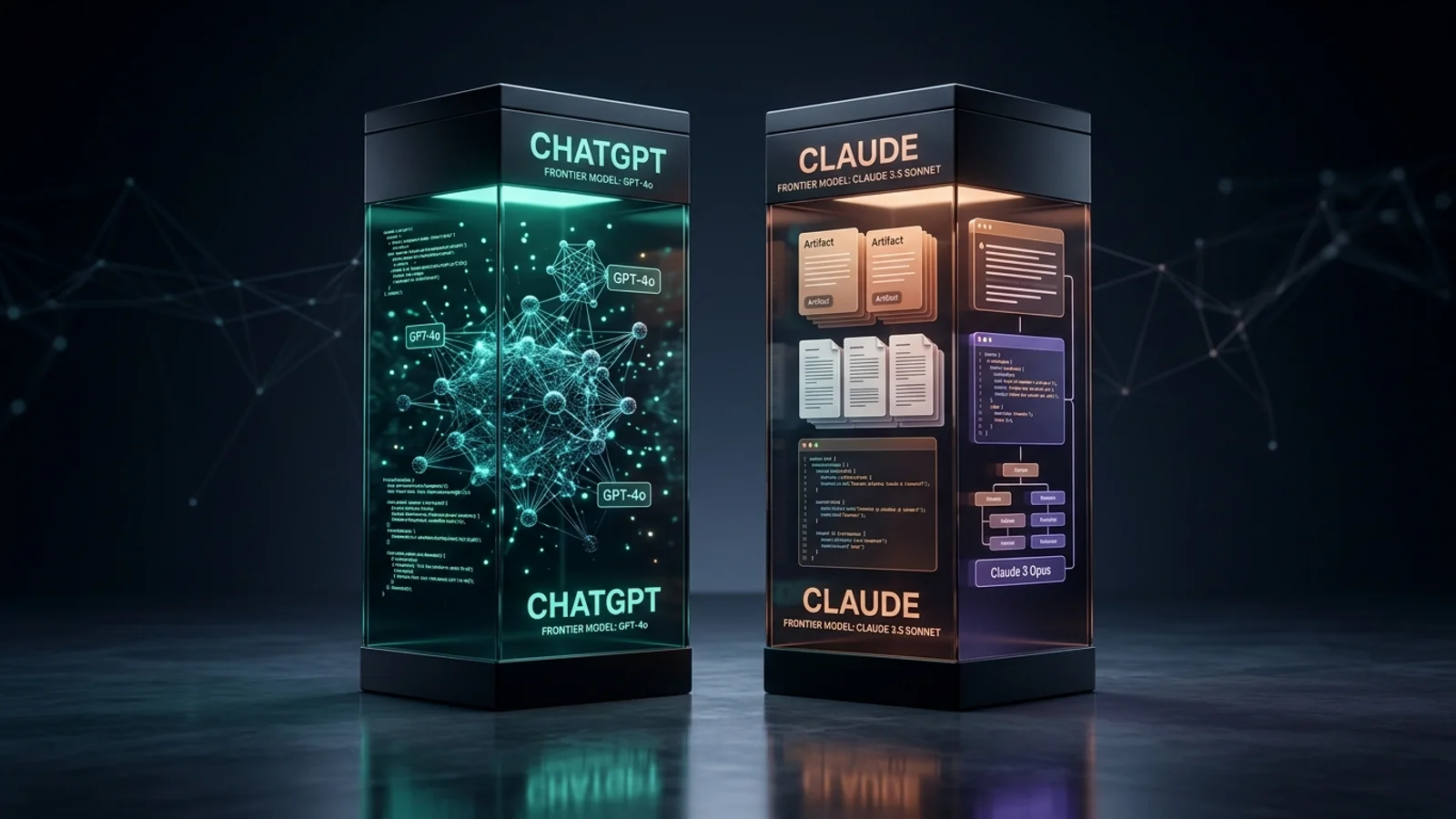
Most AI productivity tools are thin orchestration layers around the same underlying models. They call OpenAI's GPT-4o or Anthropic's Claude 3.5 Sonnet, apply system prompt scaffolding, and wrap the response in a modern UI.
There is nothing inherently flawed with building on existing APIs. However, when the foundational reasoning and generation capabilities are identical across competing products, product differentiation cannot come from model intelligence alone. It must come from bespoke context pipelines, proprietary data graphs, or superior interface ergonomics.
The summarization trap
The most ubiquitous AI productivity feature is automated summarization: summarize your emails, your standups, your Slack threads, and your internal documentation.
The fundamental tension with automated summarization is trust. A summary is only useful if the reader trusts it enough not to verify the original source. When language models occasionally drop critical nuances, misattribute quotes, or omit negative constraints, users feel compelled to check the original message anyway. When that happens, the AI has not eliminated a task — it has added a verification step.
What genuinely creates utility
The AI productivity tools that demonstrate lasting retention tend to share three defining traits:
- They solve a single, constrained problem exceptionally well. Granola focuses on collaborative meeting notes. Perplexity specializes in grounded web research. Linear embeds AI strictly to streamline issue tracking. They avoid the temptation to become an all-in-one assistant.
- They integrate directly into existing workflows. Rather than asking teams to migrate to a new standalone dashboard, they live where work already occurs — such as Cursor inside the code editor, or browser-native writing tools.
- They are explicit about uncertainty. High-utility tools indicate source citations, signal confidence thresholds, and make it effortless to inspect raw inputs.
What genuine innovation looks like
Sustainable differentiation in AI productivity requires moving beyond simple prompt wrappers toward architectural innovations:
- Continuous user context: Systems that understand persistent project goals and team conventions over months, not just the current active prompt.
- Task elimination over task acceleration: Tools that evaluate whether a meeting or status update is necessary in the first place, rather than simply generating a longer summary of an unnecessary call.
- Cross-application state graphs: Connecting data across isolated tools (Git, Slack, Linear, Google Docs) into a coherent semantic map.
- Cognitive load reduction: Minimizing the decision fatigue of triage and prioritization, rather than multiplying the volume of generated text.
The bottom line
Much of the productivity gain attributed to AI in 2026 comes from applying versatile frontier models directly — via ChatGPT or Claude — rather than maintaining subscriptions to dozens of single-feature SaaS wrappers.
The specialized applications that endure will be those that provide proprietary data integration, deep domain ergonomics, and workflow reliability that cannot be reproduced with a single foundation model prompt.
Common Questions & Practical Answers
Most commercial AI productivity tools are 'thin wrappers' built over the exact same foundation APIs (OpenAI GPT-4o, Anthropic Claude). Without proprietary data or deep systems integrations, they offer nearly indistinguishable summarization and autocomplete features.

Editorial contributor exploring research tools, student productivity workflows, and human-computer interaction for Lucivo.
Related articles

The Weekly Breakdown
High signal AI & software stories.
Direct to your inbox. No hype.
Independent analysis of AI models, developer tools, and computing architectures. Delivered every Sunday morning. 100% free.